Road to Zero
Industrial accidents are often treated as unavoidable side effects of complex operations. Many companies do not even set “zero accident” targets, considering them unrealistic.
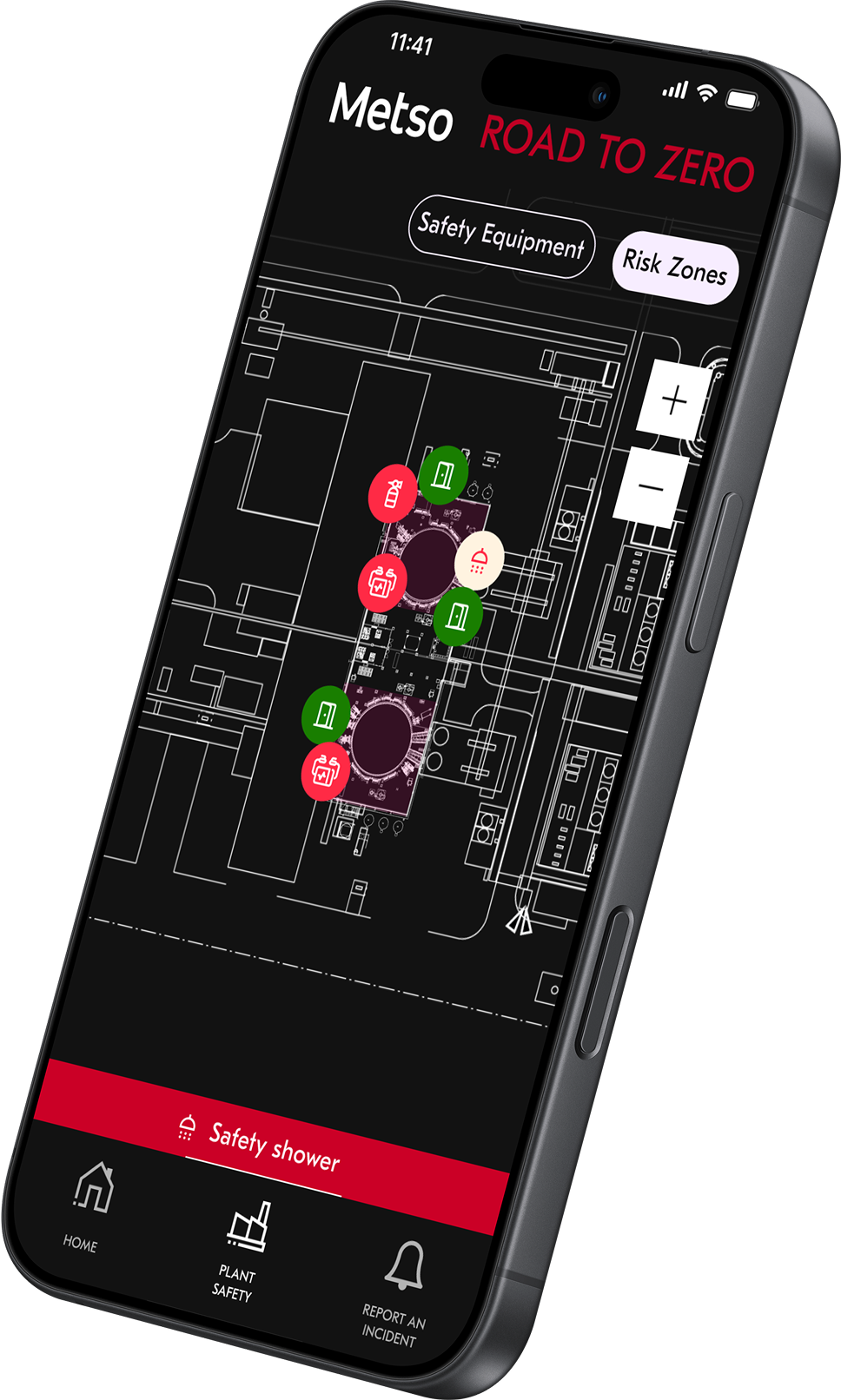
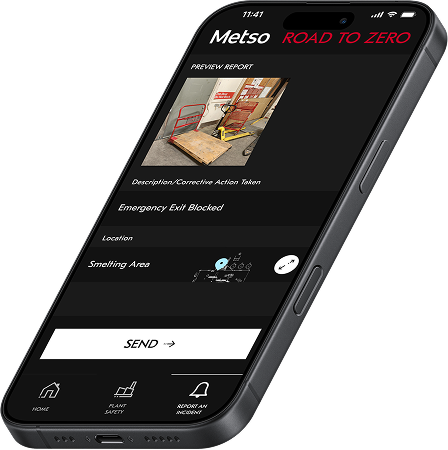
This mindset is reflected in how safety is managed: incidents and risk observations are logged irregularly—sometimes even on paper—and typically only after harm has already occurred.
As a result, critical safety information is fragmented across systems, formats, and teams. Valuable signals exist, but remain buried in disconnected reports and delayed processes.
Reactive logic has defined industrial safety for decades, despite the global cost of serious non-fatal injuries reaching billions of dollars each year.
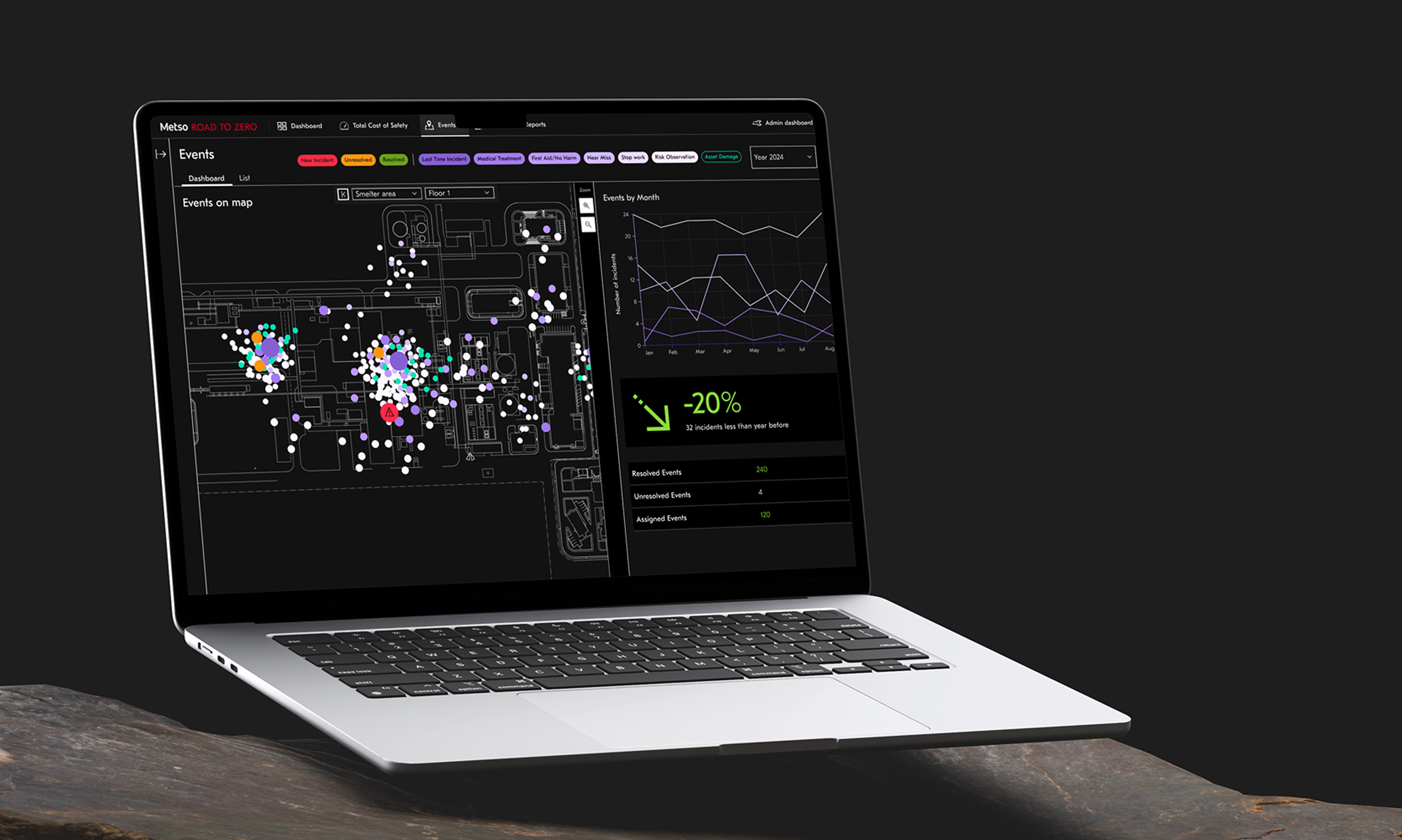
ROAD TO ZERO introduces an interactive, predictive safety system designed to eliminate preventable harm in industrial environments.
Developed by Metso, a global leader in minerals processing and metals refining, the solution transforms safety from a fragmented reporting process into a unified, real-time system for identifying and preventing risk.
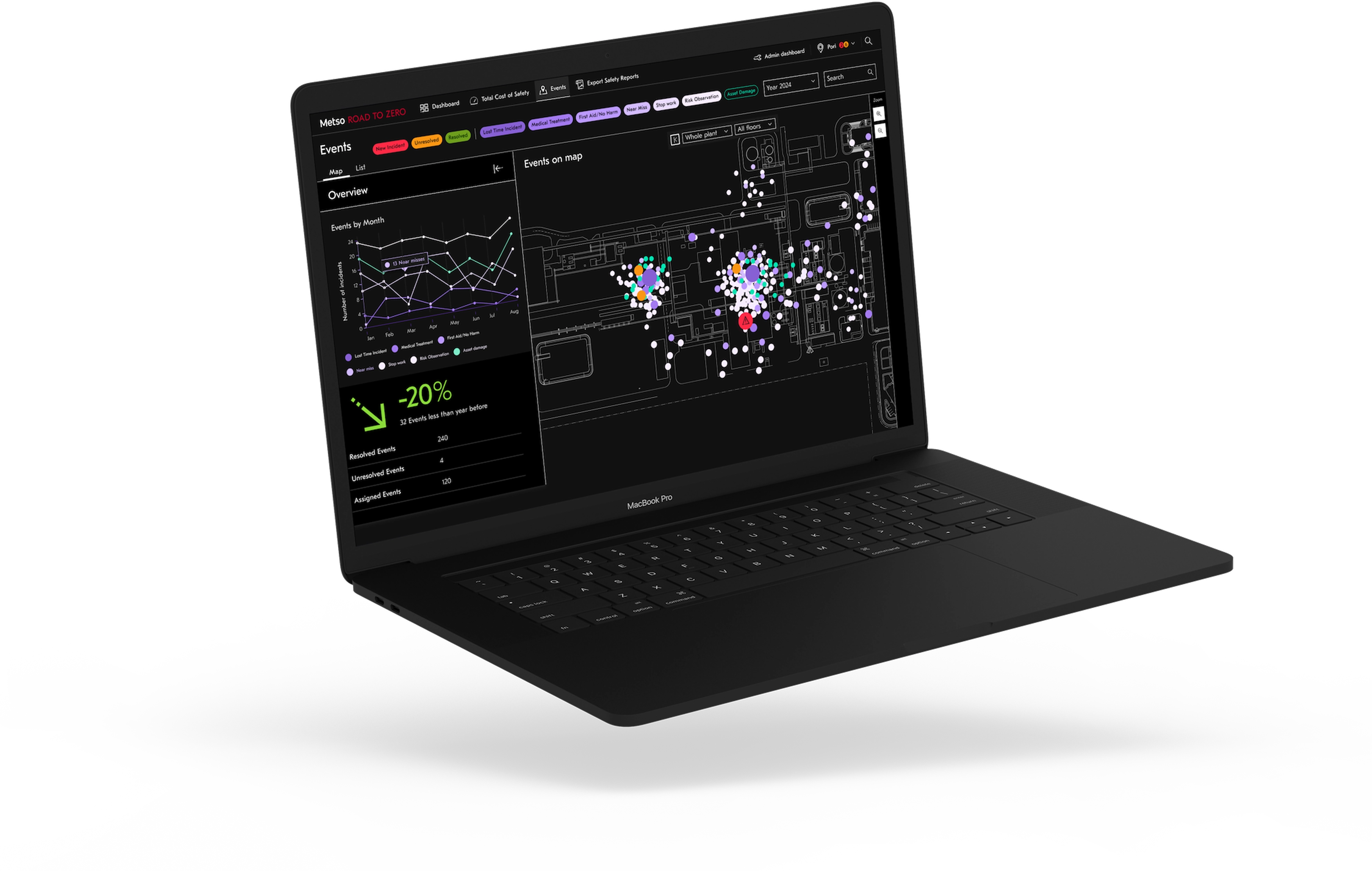
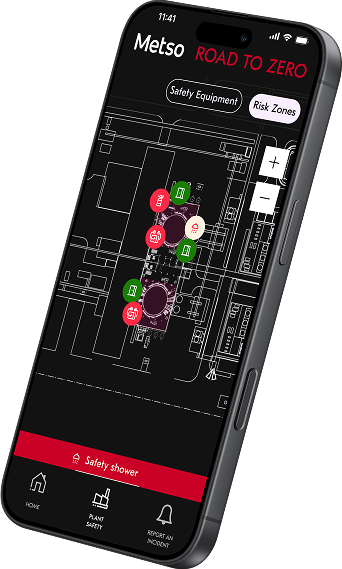
At the core of the design is a shared model of the plant, where incident data, safety observations, operational conditions, and predictive risk modelling are brought together into a single, continuously evolving view of safety.
Instead of reviewing disconnected reports after the fact, teams can explore emerging vulnerabilities directly in the context of real operations, understand how risks develop, and intervene before incidents occur.
This shift—from isolated data and delayed response to a shared, predictive system—enables safety to function as an active part of operations rather than a retrospective process.
Safety observations, incident data, and operational conditions are continuously collected from across the plant – by frontline workers, systems, and existing processes.
Instead of isolated reports, all inputs contribute to a shared and evolving view of safety.
The platform connects data streams and identifies patterns, correlations, and emerging vulnerabilities.
Risks are visualized within the context of the plant, allowing teams to see where and how incidents are likely to occur, not just where they have happened before.
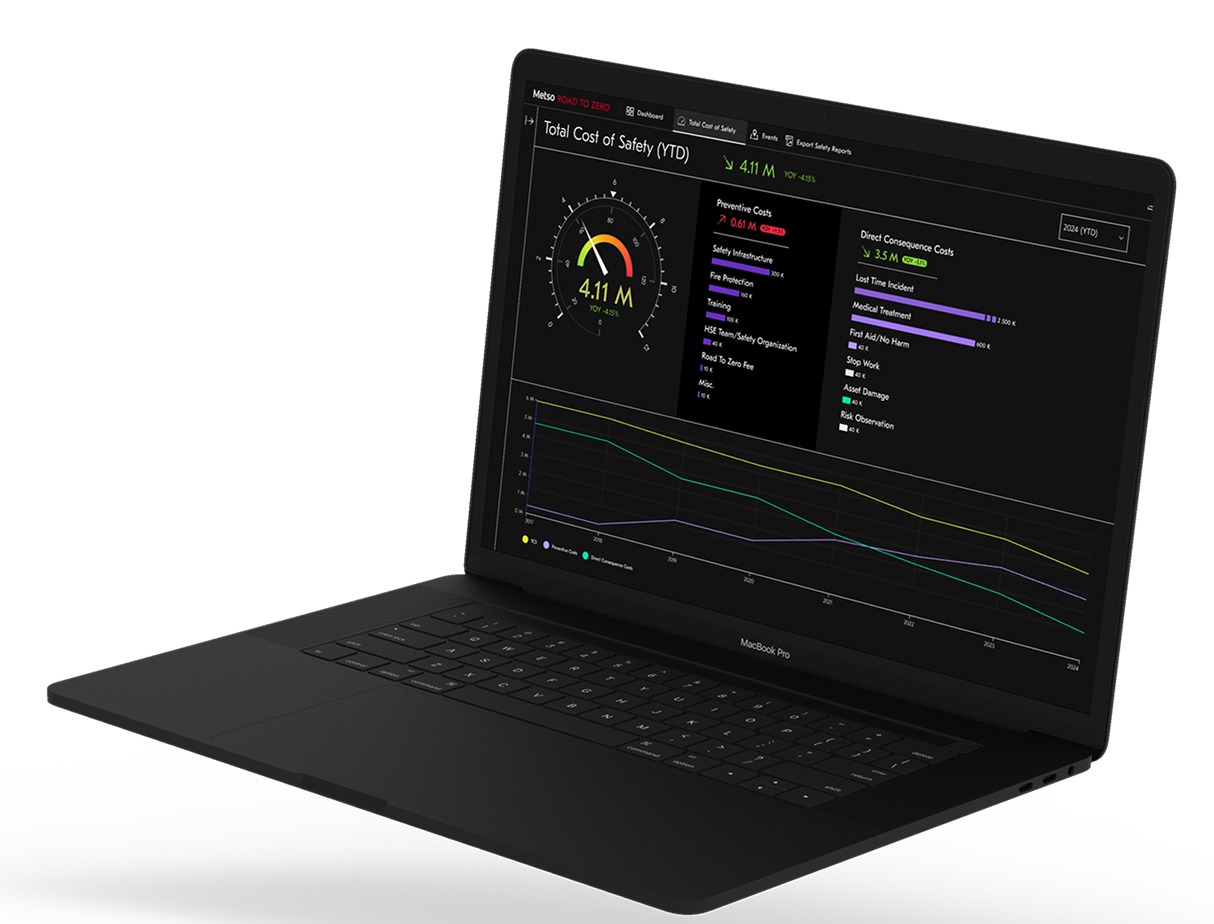
At the core of ROAD TO ZERO is a decision framework that translates operational risk into measurable economic impact.
Instead of evaluating safety primarily through incident statistics, the system quantifies the cost of preventable harm—combining factors such as production disruptions, operational losses, and human impact.
This makes the consequences of risk visible before incidents occur, allowing organizations to understand not only where harm might happen, but what it would cost.
Preventing harm becomes a measurable business decision –not a cost.
By connecting safety directly to business performance, ROAD TO ZERO enables organizations to prioritize preventive actions with the same rigor as other strategic investments. Safety is no longer managed as a compliance requirement—but as an integrated part of operational and financial decision-making.
“What impressed us most is how quickly the platform started generating meaningful safety data.
Observations that previously went unreported are now captured daily, giving us a much clearer picture of emerging risks across the plant.”
Early deployments show measurable shifts in how safety is managed in practice. Safety observations are captured more consistently, risk visibility has improved across teams, and organizations are generating richer insight into emerging vulnerabilities and preventive opportunities. Instead of isolated reporting, safety is becoming a shared and continuous operational activity.
“Too often in this industry we accept that accidents will happen. With ROAD TO ZERO we are challenging that assumption – not only within Metso, but across the industries we serve – by designing operations where preventable harm simply has no place.”
While ROAD TO ZERO is already being deployed in high-risk industrial environments, its ambition extends far beyond individual sites. The system introduces a new way of understanding and managing safety — one that could be applied across industries where risk is inherent, from mining and metals to energy, manufacturing, and beyond.
By combining predictive risk modelling, real-time collaboration, and economic decision-making, ROAD TO ZERO creates the conditions for a fundamental shift: from managing accidents to systematically preventing them.
The long-term vision is clear: to make zero harm not an aspiration, but the expected standard across hazardous industries.
Mikael Jåfs Director, Digital Technology
Mia Nygård Director, Minerals QEHS
Pirkka Luukkonen Cloud Technical Lead
Salla Erkkilä Client Director, Lead Strategist
Johanna Lamberg Senior Service Designer
Kalle Lamminpää Sales Director
Jussi Yrttiaho Product Designer
Mikko Levonmaa CTO
Tero Riipinen Developer
Lasse Mäkinen Developer
Tuomas Kujala Developer